
How to Avoid Losing Customers to Your Competitors: 9 Retention Tactics
Most subscription businesses don't lose customers to competitors overnight; they lose them through accumulated friction, missed value signals, and the silence that follows a support ticket that never got a real answer.
No subscriber wakes up one morning and decides to cancel. The decision happens slowly: a support ticket that took too long, a check-in that never came, a renewal conversation that felt like a sales call, until a competitor's proposal arrives on the right day, and switching feels easier than staying.
The fastest way to stop losing subscribers to competitors is to out-know them and out-serve them before they start looking. Subscription businesses that monitor behavioral warning signs early, reduce friction at every touchpoint, and have a ready response for competitive pressure retain more MRR without starting a price war.
Key Highlights:
- Most subscription businesses are losing subscribers to competitors due to budget pressure and infrequent usage, two problems that a proactive value communication system can directly prevent.
- A competitor's pitch lands hardest on subscribers who stopped seeing the value your platform delivers.
- The embedded advantage must be built before competitors arrive; the window to build it is between your first and twentieth million in ARR.
- A discount on the cancel button saves the session but not the relationship.
Why Do Customers Really Churn?
Most businesses don't realize they're losing customers until the growth chart starts declining, and by then, months of compounding churn have already done their damage. The customers leaving you right now are not all leaving because a competitor is cheaper, offers a better product, or has a flashier brand. They're leaving because small, fixable frictions stacked up until switching felt easier than staying.
When Price IS the Reason (and When it's Just the Excuse)
Price is the real reason a customer leaves in one specific situation: when your price is genuinely out of line with the value a customer receives, in comparison to a competitor offering the same outcome for measurably less.
Budget pressure is the most commonly cited reason subscribers cancel, but it´s not the same problem as a price problem.
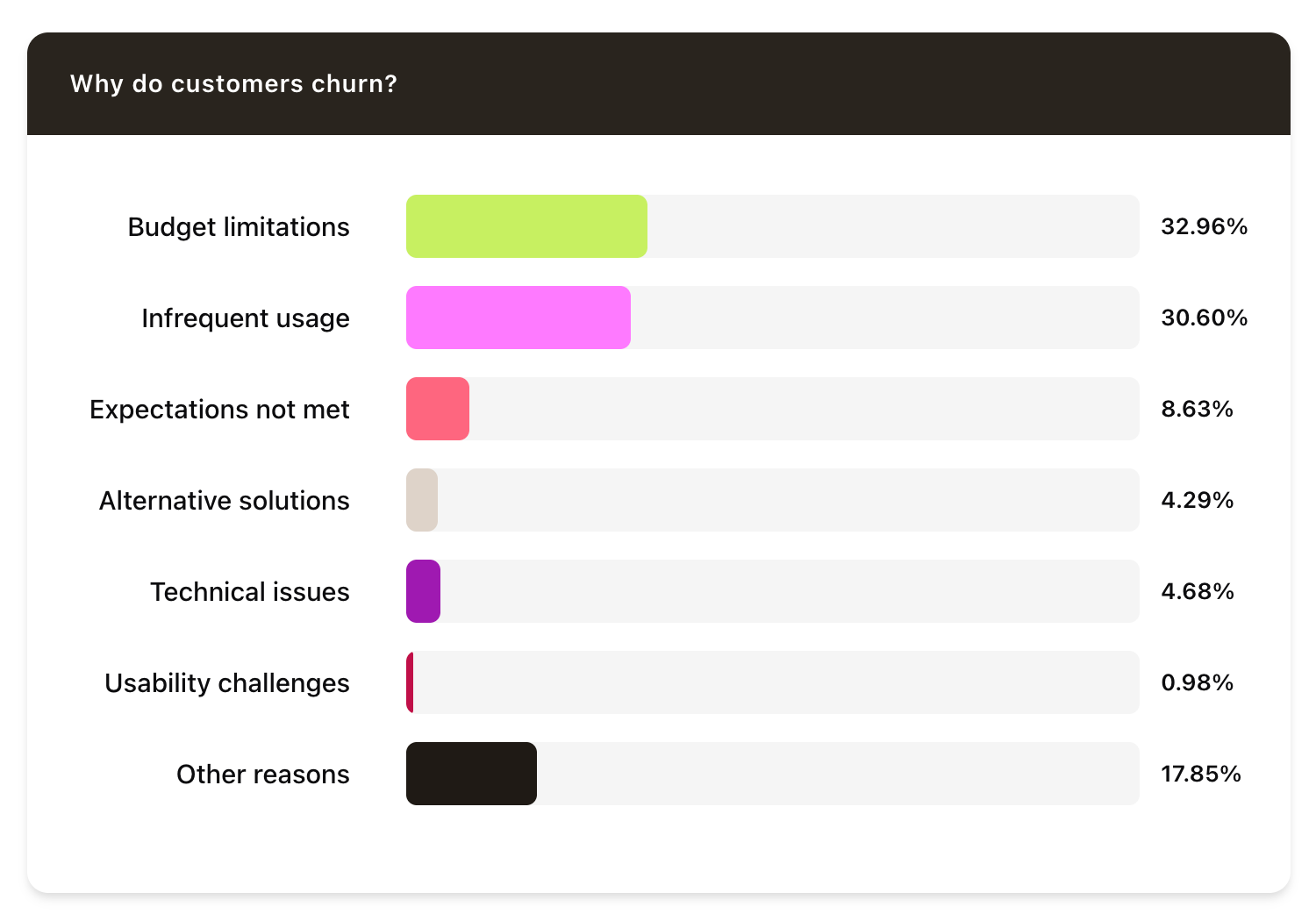
A subscriber who cancels because of budget pressure has made a specific calculation: the platform's demonstrated value does not outweigh the monthly or annual fee when the company is cutting software spend. That is a value visibility problem, not a pricing problem. The product failed to make its outcomes measurable enough to survive a CFO's cost review.
A subscriber with a genuine price problem has compared your subscription fee to a competitor's fee for a comparable outcome and concluded the competitor delivers more for less. These two situations look identical at the cancel button and require different responses.
The Small Things That Make Subscribers Choose a Competitor
Other reasons for subscribers choosing competitors are an accumulation of small unresolved frictions, like a support ticket that sat open for nine days, a billing error that took three follow-ups to fix, an onboarding milestone that was promised in week two and delivered in week six, that nobody flagged as urgent because none of them were.
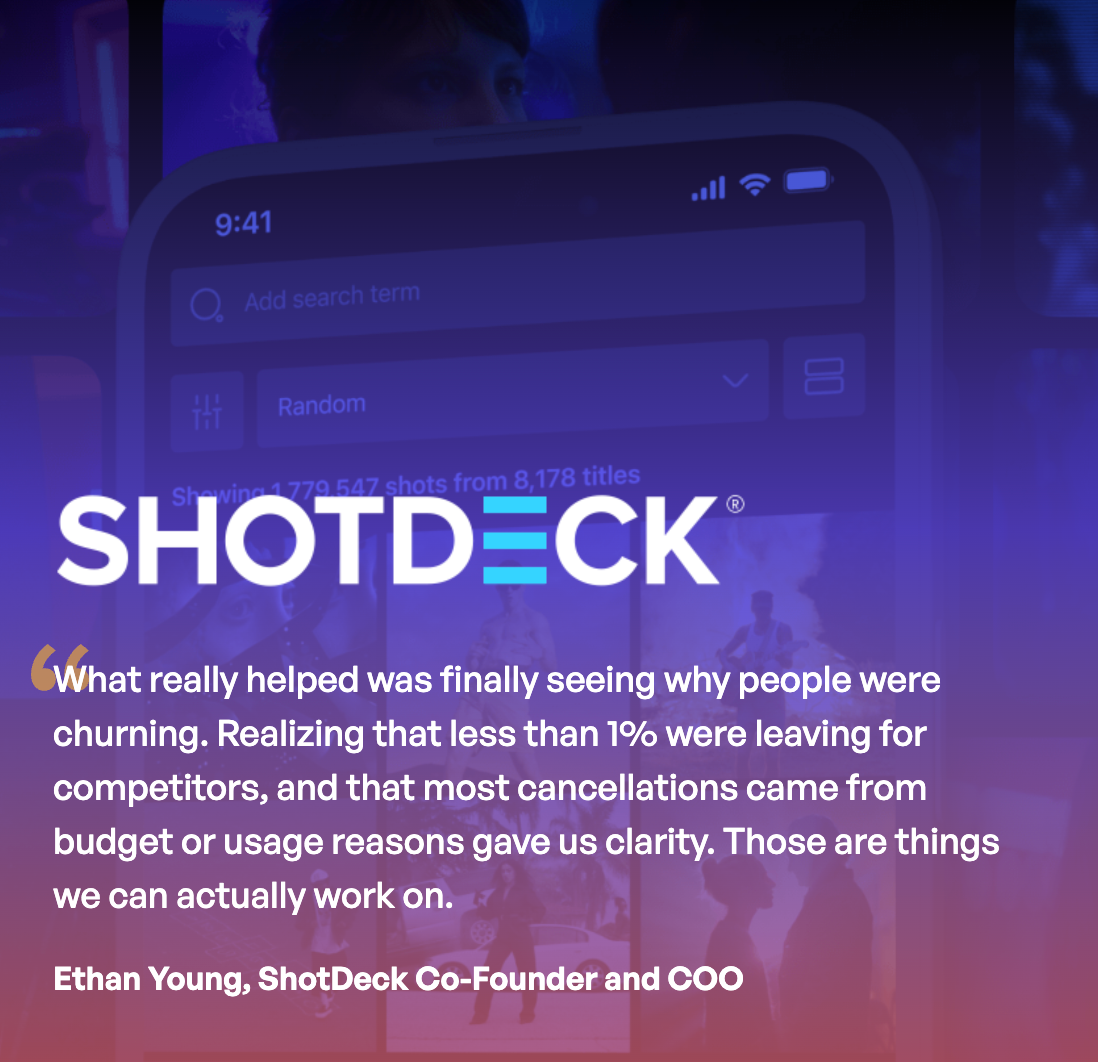
ShotDeck, the largest searchable HD movie image library in the world, confirmed this pattern after gaining visibility into their cancellation data for the first time: less than 1% of cancelling subscribers cited a competitor as their reason for leaving, while the overwhelming majority cited budget pressure or infrequent usage: two problems the team could actually fix.
See how ShotDeck achieved such impressive results →
Each of them, in isolation, is tolerable; two or three stacked on top of each other, timed with a competitor's well-placed free trial or price, is enough to end a four-year subscription relationship. The competitor does not win because the product is better; they win because switching feels like an easier option.
The Complacency Trap: Why Long-term Customers are More at Risk Than New Ones
The subscribers you have had for three, five, or ten years are not your safest accounts; they are your most exposed ones. Long-term relationships breed assumptions, and assumptions are where retention goes to die.
Jill Konrath, B2B sales strategist and author of Snap Selling, documented exactly this pattern: a company with 20-plus years of continuous contracts, superior service ratings, and deep personal relationships lost several major accounts overnight to smaller competitors who could not match their breadth or depth of service. Konrath's diagnosis was direct: "long-term relationships can breed complacency, and when that happens, it's only a matter of time before you get the wake-up call."
The losing company did not fail on price, product, or delivery; they stopped winning the relationship and assumed longevity would do that job instead. The competitor who took the account did not win a head-to-head comparison; they won because the incumbent had stopped competing.
Silent Warning Signs a Customer Is About to Leave
Most subscription businesses find out a customer is leaving when the cancellation email arrives, and at that point, the decision has already been made, the alternative has already been evaluated, and the conversation you needed to have three months ago is now irrelevant.
Customers do not leave without warning. They signal their exit through behavioral shifts that are visible weeks or months before a cancellation, if you know what to look for. In a B2B relationship, those signals look different from those in a SaaS product; they show up in response times, complaint patterns, contact changes, and purchasing behavior rather than login frequency or feature adoption.
We have covered the full early warning system for SaaS products in detail in How to Identify the Early Signs of Churn article.
9 Retention Tactics to Stop Losing Customers to Competitors
By the time a subscriber signs with a competitor, the decision was made weeks or months ago, and every stage of that process had a moment where the right move could have changed the outcome. The tactics below cover that entire timeline: from building relationships that make a competitor's pitch irrelevant before it even arrives, to responding when a competitor is already inside your best account, to saving a subscriber who has already mentally checked out but has not yet hit cancel.
Tactic 1: Make Your Platform Harder to Leave Than It Is to Join a Competitor
The reason a competitor's pitch lands is almost never that their product is better; it is that switching feels easier than staying. A subscriber who has accumulated three unresolved friction points over six months and receives a competitor's clean onboarding offer on the right day will frame switching as relief, not risk.
Eliminating friction at every touchpoint means auditing every single interaction a subscriber has with your platform, from the first login to the renewal conversation, and removing the irritations that make a competitor's fresh-start promise feel rational.
The Churnkey voluntary churn benchmark report, which analyzed 2 million cancellation survey responses, found that infrequent usage is the second largest voluntary churn driver at 30.60% of all cancellations and it can be a consequence of friction in the onboarding-to-habit formation window, not a sign that the subscriber never needed the product.
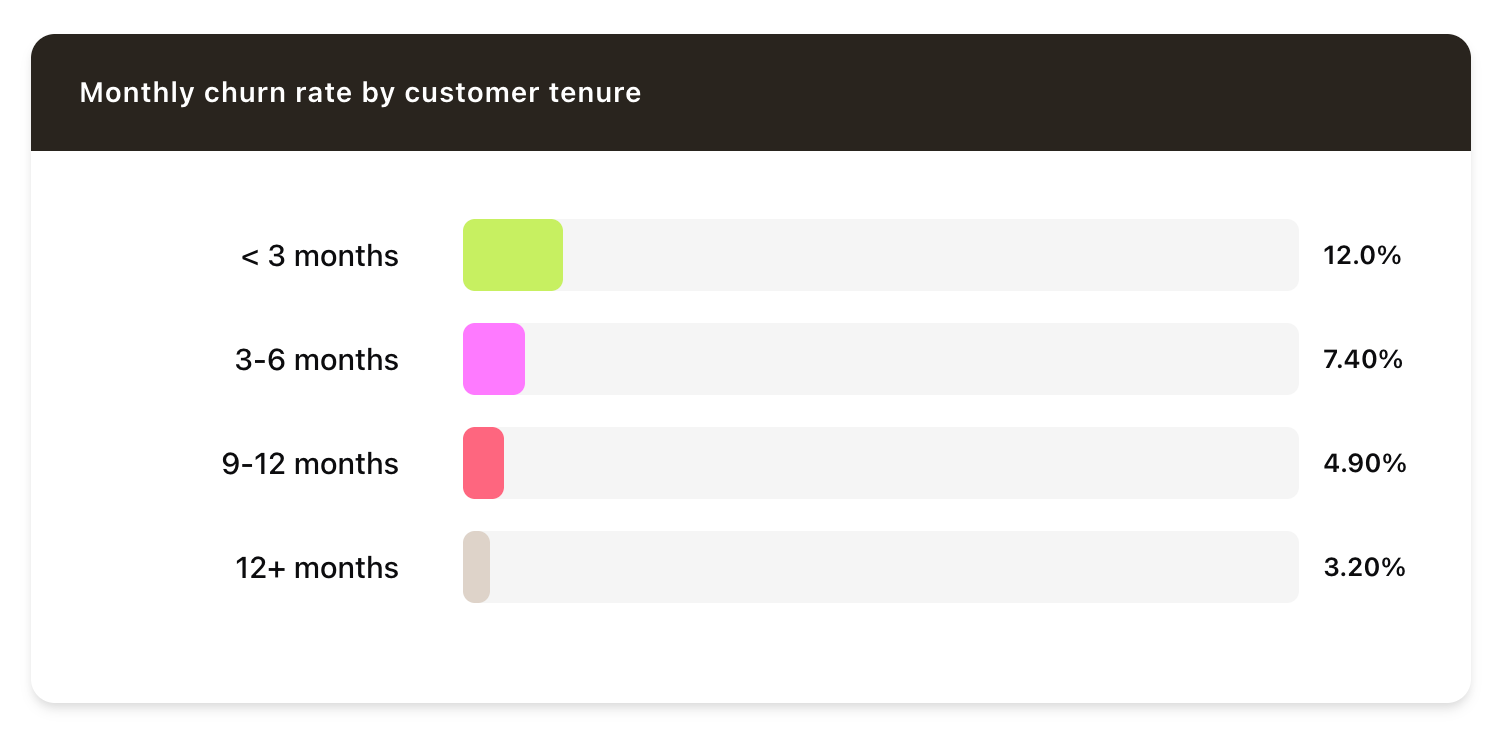
The most common mistake subscription businesses make is auditing the post-onboarding experience while ignoring the first 30 days, which is where the 12% monthly churn rate for new subscribers is being generated, and where a competitor's free trial offer can do the most damage.
Tactic 2: Build Multi-Stakeholder Relationships So a Competitor Cannot Win by Targeting One Person
The most reliable competitive attack on a subscription account is identifying the one person inside the account your team has neglected and reaching out to them.
Building multi-stakeholder relationships means owning active, named relationships with multiple people inside a single subscriber account, like the end users who log in daily, the team admin who manages seat allocation, the finance contact who processes the subscription charge, and the senior decision-maker who evaluates renewal, so that a competitor has no unguarded entry point.
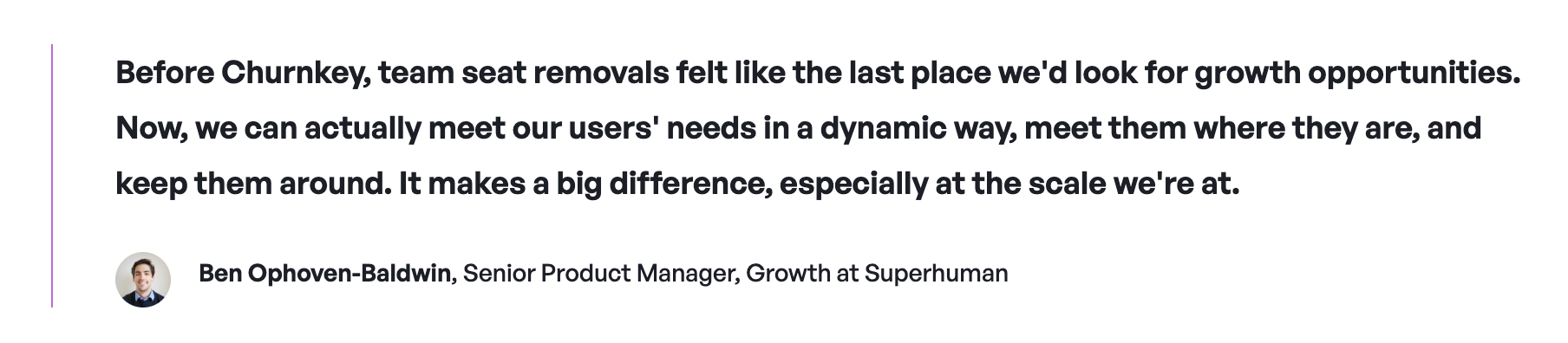
Superhuman discovered the same vulnerability: team seat removals were costing the business hundreds of thousands of dollars in annual recurring revenue because individual users had gone inactive, and no one inside the account had taken ownership of reassigning their seats.
Superhuman worked with Churnkey to build a dynamic seat handoff mechanism that reduced team seat removals and closed the internal account gap a competitor could have exploited.
See how Superhuman achieved such impressive results →
Tactic 3: Make Your Value Visible Before a Competitor Makes Their Pitch
A competitor does not win a subscriber who knows what they would be giving up. The problem is that most subscribers do not know because nobody on your team has ever made that value explicit.
A subscriber who receives a monthly impact summary showing specific outcomes is harder to lose, because a competitor's pitch requires them to give up proven value and measurable results.
This is the same principle behind one of the quick wins that growth operator Kyle Poyar shared after interviewing 20 operators about early-impact tactics: run a "patient zero" analysis on your best-expanding accounts and revisit the exact journey of your top customers from day one. According to Poyar, this almost always uncovers surprising moments where value was delivered but never communicated back. Those moments are retention gold sitting unclaimed in your data.
The practical quick win here is copy. Poyar also points out that most onboarding and lifecycle emails focus on what to do and how to do it, but very few explain why it matters to the subscriber; what is actually in it for them. Small edits to your renewal, check-in, and milestone touchpoints to add that "why" layer can shift how subscribers perceive the relationship: from vendor to partner, from cost to investment.
Tactic 4: Build the Embedded Advantage Before Competitors Arrive
A competitor can match your pricing in a single conversation and ship a comparable feature set in a single quarter. Building an embedded advantage means integrating so deeply that replacement isn’t a mild inconvenience; it’s a massive cost in migration, retraining, and rebuilding integrations. The Churnkey path to $100M ARR research identifies the exact window in which this tactic is most critical: alternative solutions as a churn driver are nearly zero for subscription businesses under $5M ARR, increase 30x for SMB SaaS by $20M ARR, and increase 75x for consumer businesses at the same milestone.
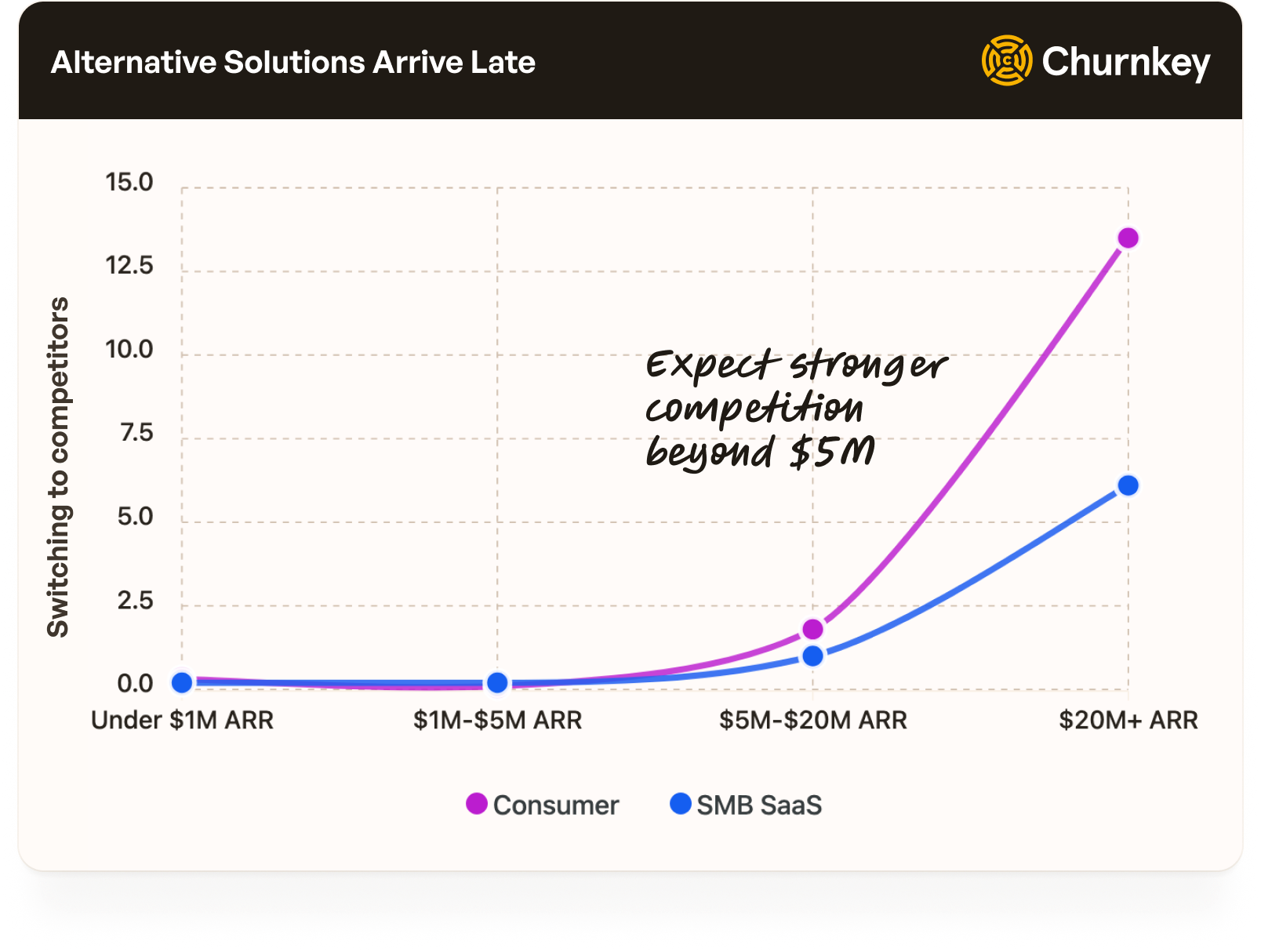
The embedded advantage you build between $5M and $20M ARR determines whether you survive the competitive flood that arrives after $20M. A subscription business that reaches that milestone without deep product integration, custom workflows, and data depth has no structural moat when venture-funded competitors launch simultaneously into a validated category.
Tactic 5: Use the Annual Business Review to Pre-Reject a Competitor's Renewal Pitch
A subscriber who has participated in building next year's product success roadmap, named their own priorities, and seen those priorities reflected in a joint action plan will reject a competitor's pitch because accepting it means abandoning a plan they helped create.
The most common mistake subscription businesses make with the ABR (Annual Business Review) is focusing on a new feature demo or an upsell proposal, which signals that it is about your revenue goals rather than their business outcomes, destroys the trust the format is designed to build, and leaves the competitor's window wide open.
Tactic 6: Know What Your Competitors Are Offering Before Your Subscribers Do
The most dangerous competitive threat in a subscription business is not the competitor you know about; it is the competitor who has been running a six-month email sequence into your highest-MRR accounts while your team has been focused on product delivery.
You must have a process in place for tracking exactly what your competitors are offering, how they are positioning against you, and which of your subscribers they are targeting before any of your subscribers tell you about it.
Tactic 7: Think Like the Competitor Trying to Steal Your Best Accounts
The only way to protect your accounts from a competitor is to understand how they would take them. The Role Playing Audit is a structured team exercise in which your own customer success and sales team spends time trying to steal your best subscribers.
It includes mapping out how a competitor would approach your accounts, what product gaps they would exploit, what doubts they would plant in a renewal conversation, and what free trial or migration offer they would build to make switching feel rational.
Tactic 8: Structure Your Pricing So Staying Gets More Valuable Every Year
A subscriber at the same price, on the same plan, with the same features as three years ago has no compounding reason to choose you over a new entrant: the decision is being re-evaluated on a flat value curve against a competitor's introductory offer.
Loyalty-based pricing means structuring your subscription pricing model so that customers who stay longer earn compounding advantages, like lower per-seat rates at higher user counts, priority support access, early access to new features, or anniversary benefits, without requiring a negotiation or a competitive threat to trigger the benefit.
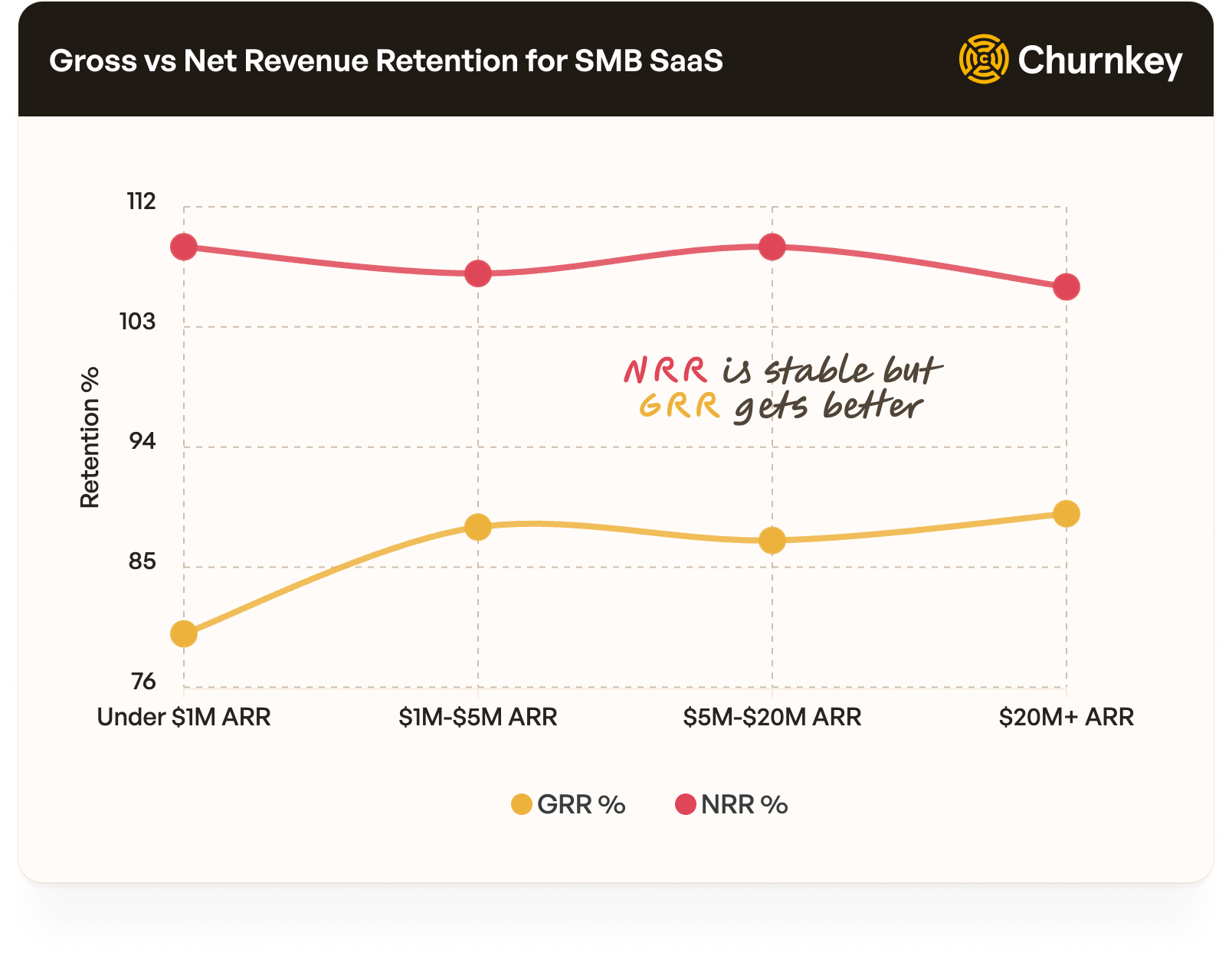
Our analysis identifies the specific gap this tactic addresses: SMB SaaS users are stickier as companies scale and GRR improves, but NRR stays flat because existing subscribers do not expand; they stay at the same tier, generating the same MRR year after year, with no structural incentive to grow inside the platform or any structural disincentive to evaluate a competitor.
Dan Martell, founder of SaaS Academy, developed the 10-5-20 rule as a practical calibration framework: deliver value the subscriber perceives as ten times greater than the fee paid, increase prices for new subscribers by 5% increments until 20% of new prospects decline on price alone, then hold at that ceiling.
Tactic 9: When a Subscriber Is Leaving for a Competitor, Run the Save Conversation and a Discount
When a subscriber signals they are cancelling because a competitor is cheaper or better, most customer success teams do one of two things: they panic and offer a discount, or they accept the answer and process the cancellation.
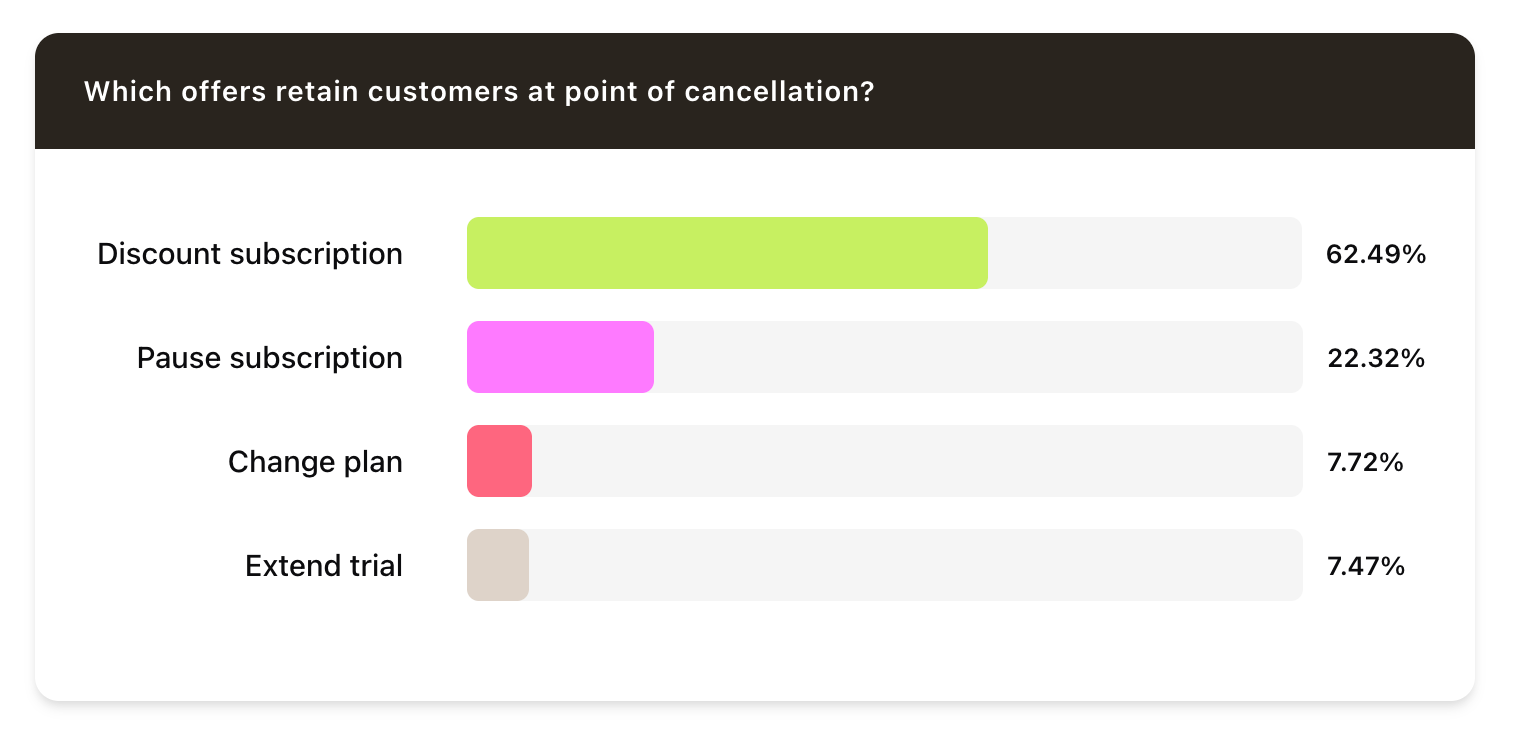
Both responses are wrong, and both lose the account. The Churnkey voluntary churn analysis shows that at the point of cancellation, discount offers carry a 62.49% acceptance rate, but a discount that saves the session without addressing why a competitor's pitch felt compelling will produce the same cancellation at the next renewal.
After offering a discount, follow the steps below:
- Confirm the subscriber's concern has been heard.
- Ask specifically what the competitor is offering that your platform is not: price, feature, service level, or something else.
- Check if there is a gap between what the subscriber expected and what they received, and acknowledge it.
- Ask a direct question that converts the conversation into an explicit commitment, "If we deliver on what I just outlined, does that give you a reason to stay?", rather than a verbal save that dissolves before the next invoice.
Conclusion
Most subscription businesses find out that a competitor took their account after the contract is already signed. By then, every warning sign that was visible weeks earlier has become a post-mortem. The 9 tactics in this article are designed to interrupt that process at every stage: before a competitor finds an entry point, while a competitor is actively pitching, and at the moment a subscriber is deciding whether to cancel.
Use feedback AI to identify which friction points, value gaps, and cancellation reasons are driving voluntary churn in your specific subscriber base, giving your customer success team the intelligence to act before a competitor does. And when a subscriber does reach the cancel button, the Cancel Flows feature presents the right offer, like a discount, a pause, or a re-onboarding path, based on the specific reason they are leaving, not a generic retention script.